
BDI-II Alternatives for Depression
Free, evidence-based depression measures that match the BDI-II — with the same digital workflow, at no cost.
Written by Dr Elizabeth Rojas · Last updated July 2026
On this page
For psychologists, psychiatrists and mental health clinicians weighing alternatives to the paywalled Beck Depression Inventory-II (BDI-II), the goal is a widely used, well-established, genuinely multipurpose measure. Depression is one of the most common mental health conditions and a leading cause of disability worldwide, and it rarely presents alone. In practice, that means a tool that can:
- Standardise screening for DSM-aligned depressive symptom severity
- Assess functional impact and change in daily living
- Support routine symptom monitoring, outcome tracking and treatment response
- Identify self-harm risk directly
- Detect depression efficiently, reliably and accurately
- Differentiate depression from overlapping or co-occurring conditions (anxiety, trauma, chronic illness, substance use)
- Work across a wide range of demographics, populations and clinical settings
- Support treatment planning, referrals, further evaluation and diagnosis
- Capture the timeframe, frequency and duration of symptoms — not just their presence
The gold standard is a structured clinical interview covering the full range of depressive disorders — but a 45-minute interview isn’t always practical in routine care. What clinicians usually need is a measure that screens accurately, scores clearly, and points to a clinically indicated next step. Every measure below is validated in clinical, non-clinical and cross-cultural samples, across languages, age groups and co-occurring health conditions — and is free on NovoPsych.
NovoPsych's freely available alternatives
These free measures span DSM-aligned severity screening, transdiagnostic distress, and population-specific and bipolar companion tools — supporting screening, assessment and ongoing measurement-based care across the lifespan. Each is extensively validated in clinical, non-clinical and cross-cultural samples.
General Depression Screenings
Brief, free, self-report questionnaires screening depressive symptom frequency and severity, broadly aligned with DSM criteria.
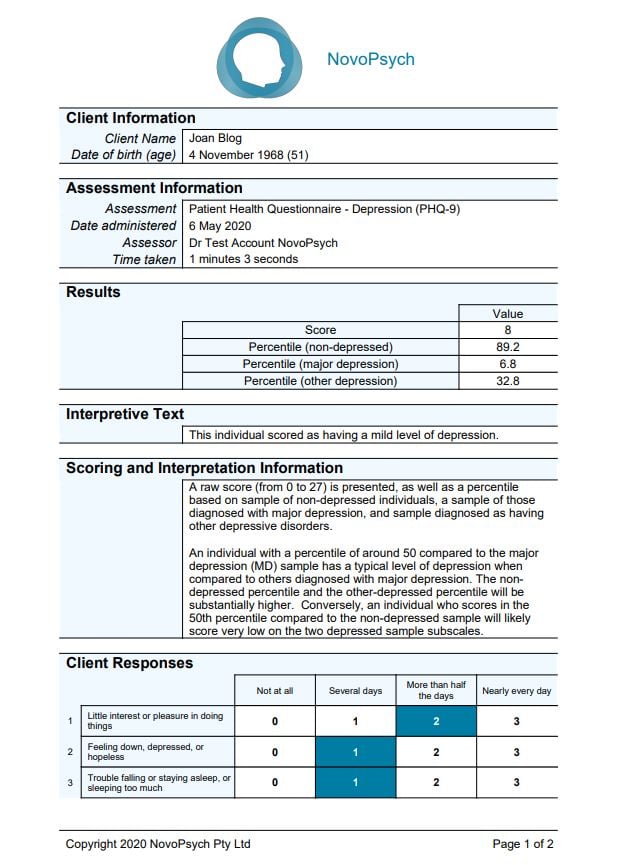
- PHQ-9 maps 1:1 to the nine DSM criteria, with a suicide-risk item and well-established change tracking
- CES-D covers all nine DSM criteria with multiple items each; its decision-tree scoring flags symptom severity for further categorising possible depression using a DSM-algorithm — plus a validated youth version (CES-DC)
- Zung SDS is the pick when physical/somatic symptoms are a clinical focus, and has the longest track record for tracking antidepressant response
Co-occurring Distress
Transdiagnostic and dimensional measures for when anxiety, stress and depression overlap.
- K10/K10+ screens non-specific psychological distress; built for cross-cultural community use
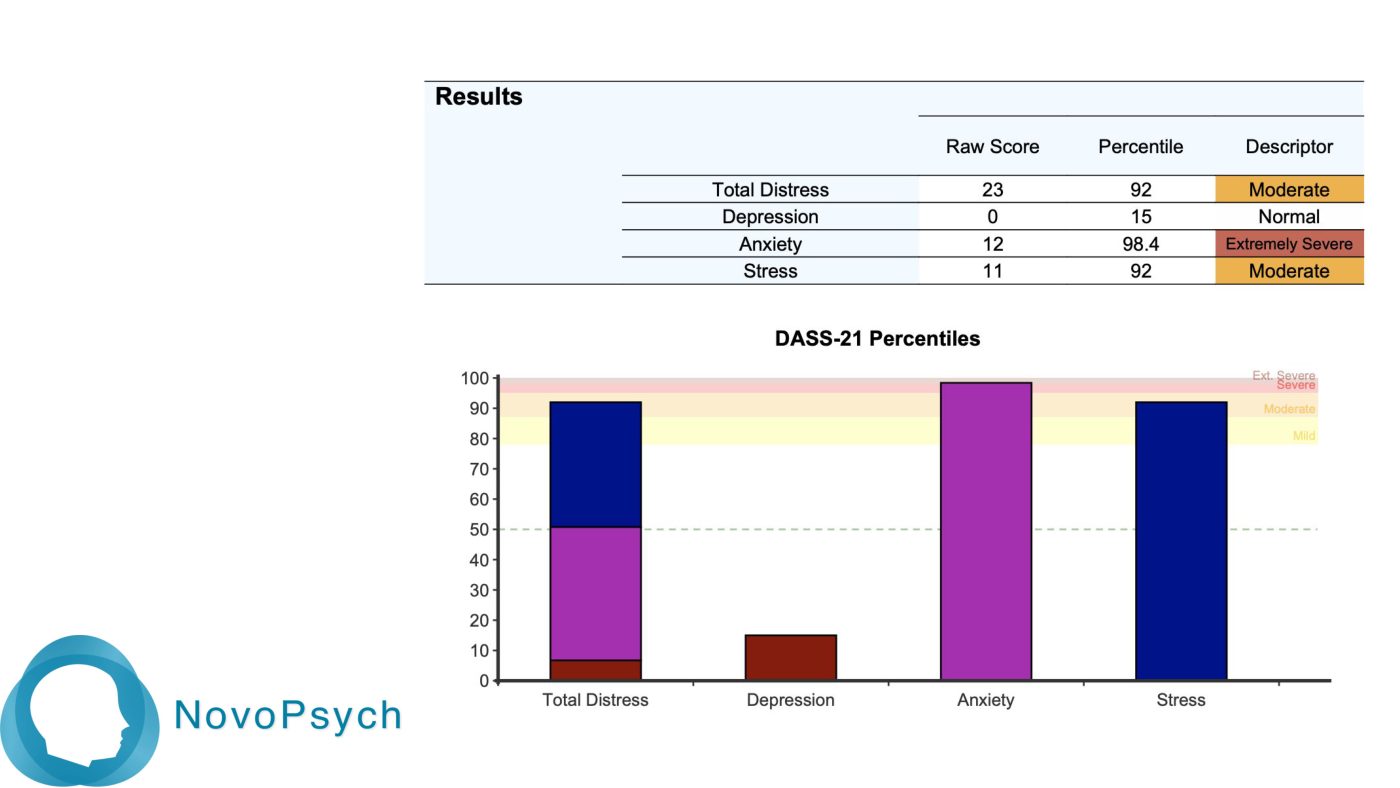
- DASS-21 separates depression, anxiety and stress into distinct 7-item subscales
- Both support outcome monitoring; DASS-21 correlates strongly with the BDI-II (r = 0.70–0.81)
Specialty & Population-Specific
Purpose-built measures for perinatal, higher-acuity and youth populations.
- EPDS: the perinatal standard, excluding somatic items that inflate scores in pregnancy and postpartum
- MADRS: clinician-rated, change-sensitive, with the most detailed suicide-risk item here
- SMFQ: youth self-report (ages 7/8–18), with a parent version for a multi-informant symptom assessment
Bipolar Screening Companions
Neither is a depression measure — both pair alongside a depression screener to catch mania/hypomania that is easily missed when a patient presents as depressed.
- MDQ: one-time lifetime screen for undiagnosed bipolar spectrum disorder
- PMQ-9: monitors current manic symptoms once bipolar disorder is confirmed — pairs with the PHQ-9

The BDI-II: what you're comparing against
If you are evaluating the Beck Depression Inventory-II (BDI-II), here is what it offers — and where a free, validated NovoPsych measure covers the same clinical ground without the per-administration licence.
Beck Depression Inventory-II (BDI-II)
A 21-item self-report questionnaire that rates how severe a person's depression symptoms are, for adolescents and adults (13+). It is one of the most widely used and heavily researched depression measures.
Strengths: decades of research behind it, clear severity bands (minimal, mild, moderate, severe), and translations for many languages and cultures.
The catch: it is commercial — you pay for each administration and report through Pearson's Q-global platform. Its cut-off scores don't stay consistent from one patient group to another, so the same score can mean different things in different settings (Wang & Gorenstein, 2013). Because several questions ask about physical symptoms like fatigue and poor sleep, it can overstate depression in people who are medically unwell (Thombs et al., 2010). It has only one brief suicide question, and companion tools for youth, anxiety and suicide risk are pay-per-use, with no dedicated bipolar screening.
The shared limitation of every depression screener
A tool can only detect what it was built to measure, and every screening tool produces some false positives — people flagged as likely depressed who, on closer evaluation, are not — more often than most clinicians expect, especially in low-prevalence populations.
The strongest approach is usually a small, purposeful combination: a DSM-aligned or broad-spectrum screener paired with something that adds differential information (a bipolar screen, an anxiety/stress subscale, a population-specific tool), so any discrepancy becomes useful clinical signal. A platform that makes it easy and free to combine measures has a structural advantage over one that charges per report.
How NovoPsych delivers the same capability — free
NovoPsych hosts the complete set of alternatives discussed here — and more than 150 others — with the digital workflow clinicians expect from a paid platform, at no cost:
- Free digital administration & scoring — automated scoring and interpretive score reports for every measure above
- Normative & clinical-reference scoring for accurate comparison and interpretation
- Packaged assessment delivery — administer or send any combination of these measures as one assessment
- Original, evidence-based versions — faithful digital translations of the original paper forms
- Customisable batteries tailored to specific evaluations and referral needs
- Measurement-based care support — repeat administrations flagged for score change, with auto-generated interpretive text in every report
- NovoNote scribe with AI insights (JAN) — capture live clinical interview information and generate a combined assessment summary directly in your clinical note
Free — no per-report fee, no licence. For practices or individuals who would benefit from AI scribe services and further customisation, a free trial and tiered plan are available, including high-usage NovoNote and Just Ask NovoNote access for tailored, comparative multi-informant reports. Explore the NovoNote template library, an example psychiatric clinical interview and assessment and child cognitive assessment report, and risk assessment — or learn more about NovoNote and Just Ask NovoNote.
How NovoPsych compares to the BDI-II
| Feature | NovoPsych (free battery) | BDI-II (Pearson) |
|---|---|---|
| Clinical capability | ||
| DSM depressive-disorder symptom alignment | ✓ PHQ-9 / CES-D / MFQ map to DSM criteria1 | ~ severity-focused; cut-offs vary by sample2 |
| Age range coverage | ✓ child (MFQ, 7/8–18) through adult & older adult3 | ~ adults / adolescents 13+ only |
| Co-occurring symptom coverage (anxiety, stress, mania) | ✓ K10, DASS-21 (anxiety/stress); PMQ-9, MDQ (mania) | ✗ |
| Dedicated suicide / self-harm risk item | ✓ PHQ-9, CES-D, EPDS item 10, MADRS4 | ~ single item, less comprehensive than MADRS |
| Perinatal-specific validation | ✓ EPDS5 | ✗ |
| Youth / child-specific validation | ✓ SMFQ, CES-DC6 | ✗ |
| Bipolar / mania screening companion | ✓ PMQ-9 (monitoring), MDQ (lifetime screen)7 | ✗ |
| Clinician-rated option available | ✓ MADRS | ✗ self-report only |
| Somatic-symptom confound minimisation | ~ EPDS / DASS-21 minimise it; Zung / CES-D still somatic-loaded | ✗ documented inflation in medically ill8 |
| Norms & interpretation | ||
| Normative reference samples (age, gender, culture) | ✓ varies by measure9 | ✓ varies2 |
| Diagnostic cutoff validated against clinical interview | ✓ | ~ cutoffs shift by sample2 |
| Severity band classification scoring | ✓ | ✓ minimal / mild / moderate / severe |
| Published reliable-change / MID thresholds | ✓ PHQ-9, CES-D, PMQ-9, K1010 | ~ used in research, less standardised |
| Platform & administration | ||
| Digital administration | ✓ | ~ Q-global add-on, paid |
| Automated digital scoring | ✓ | ~ Q-global subscription required |
| Interpretive clinical report | ✓ | ~ Q-global, paid per use |
| AI scribe / documentation integration | ✓ + NovoNote / JAN | ✗ |
| Combined / packaged multi-measure assessment | ✓ e.g. PHQ-9 + PMQ-9 / MDQ; or SMFQ + parent report | ✗ |
| Licence required | None | Commercial |
| Cost11 | Free* | Paid |
Key: ✓ present / full · ~ with limitations · ✗ absent
1. DSM alignment — PHQ-9 items map one-to-one onto the nine DSM depressive-episode criteria (Kroenke et al., 2001); CES-D covers the same nine domains with multiple items per domain (Vilagut et al., 2016); the MFQ was developed against DSM-III-R criteria and validated against DSM-IV/ICD-10 diagnoses (Angold & Costello, 1987; Wood et al., 1995).
2. Cut-offs vary by sample — a comprehensive review of the BDI-II found that its cut-off scores shift meaningfully from one patient group to another, and that representative norms are missing in some populations, so the same score can mean different things in different settings (Wang & Gorenstein, 2013).
3. Age range — MFQ/SMFQ ages 7/8–18 (Angold & Costello, 1987); PHQ-9, CES-D, DASS-21 and K10 in adults, with K10 and CES-D also validated in adolescents; Zung SDS validated in older adults; BDI-II normed primarily for ages 13+.
4. Suicide / self-harm item — PHQ-9 item 9, CES-D's suicide item and EPDS item 10 each ask directly about self-harm / suicidal thoughts; MADRS includes a more detailed suicidal-ideation item within its 10-item structure (Montgomery & Åsberg, 1979).
5. Perinatal validation — the EPDS was purpose-built and validated for pregnancy and postpartum depression screening, deliberately excluding somatic items (sleep, appetite, fatigue) that overlap with normal perinatal experience (Cox, Holden, & Sagovsky, 1987).
6. Youth / child-specific validation — the SMFQ (13-item short form of the MFQ) is validated for ages 7/8–18 against structured diagnostic interviews (K-SADS, DISC), in both self- and parent-report versions, with combined child+parent scoring improving diagnostic accuracy (Angold et al., 1995; Wood et al., 1995).
7. Bipolar screening companions — the PMQ-9 monitors current manic symptoms in patients already diagnosed with bipolar disorder and is designed to pair with the PHQ-9 (Cerimele et al., 2022); the MDQ is a one-time lifetime screen for undiagnosed bipolar spectrum disorder (Hirschfeld et al., 2000). Neither is built into, nor available alongside, the BDI-II.
8. Somatic-symptom inflation — post-myocardial-infarction patients scored higher than matched controls on the BDI-II purely due to its somatic item content, not true depressive symptoms (Thombs et al., 2010).
9. Normative reference samples — sample sizes and populations vary by measure: PHQ-9 (Kroenke et al., 2001); K10 (Kessler et al., 2002); DASS-21 (Henry & Crawford, 2005, large non-clinical UK sample); EPDS (Cox et al., 1987); MFQ (Angold & Costello, 1987, validated in multiple countries).
10. Reliable change / minimally important difference (MID) — PHQ-9 and CES-D have published reliable-change thresholds; the PMQ-9's MID is approximately 3 points (Cerimele et al., 2022); NovoPsych's K10 uses an Australian-sample-normed change index.
11. Cost — the BDI-II is proprietary and pay-per-administration through Pearson; NovoPsych's measures carry no per-report fee or licence under its standard access model.
* No per-report fee, no licence, under NovoPsych's standard access model.
References
Angold, A., & Costello, E. J. (1987). Mood and Feelings Questionnaire (MFQ). Developmental Epidemiology Program, Duke University.
Angold, A., Costello, E. J., Messer, S. C., & Pickles, A. (1995). Development of a short questionnaire for use in epidemiological studies of depression in children and adolescents. International Journal of Methods in Psychiatric Research, 5, 237–249.
Cerimele, J. M., Russo, J., Bauer, A. M., Hawrilenko, M., Pyne, J. M., Dalack, G. W., Kroenke, K., Unützer, J., & Fortney, J. C. (2022). The Patient Mania Questionnaire (PMQ-9): A brief scale for assessing and monitoring manic symptoms. Journal of General Internal Medicine, 37(7), 1680–1687.
Cox, J. L., Holden, J. M., & Sagovsky, R. (1987). Detection of postnatal depression: Development of the 10-item Edinburgh Postnatal Depression Scale. British Journal of Psychiatry, 150(6), 782–786.
Donker, T., Comijs, H., Cuijpers, P., Terluin, B., Nolen, W., Zitman, F., & Penninx, B. (2009). The validity of the Dutch K10 and extended K10 screening scales for depressive and anxiety disorders. Psychiatry Research, 176(2–3), 236–242.
He, C., Levis, B., Riehm, K. E., Saadat, N., Levis, A. W., Azar, M., Rice, D. B., Krishnan, A., Wu, Y., Sun, Y., Thombs, B. D., & Benedetti, A. (2020). The accuracy of the Patient Health Questionnaire-9 algorithm for screening to detect major depression: An individual participant data meta-analysis. Psychotherapy and Psychosomatics, 89(1), 25–37.
Henry, J. D., & Crawford, J. R. (2005). The short-form version of the Depression Anxiety Stress Scales (DASS-21): Construct validity and normative data in a large non-clinical sample. British Journal of Clinical Psychology, 44(2), 227–239.
Hirschfeld, R. M. A., Williams, J. B. W., Spitzer, R. L., Calabrese, J. R., Flynn, L., Keck, P. E., Lewis, L., McElroy, S. L., Post, R. M., Rapport, D. J., Russell, J. M., Sachs, G. S., & Zajecka, J. (2000). Development and validation of a screening instrument for bipolar spectrum disorder: The Mood Disorder Questionnaire. American Journal of Psychiatry, 157(11), 1873–1875.
Kessler, R. C., Andrews, G., Colpe, L. J., Hiripi, E., Mroczek, D. K., Normand, S. L. T., Walters, E. E., & Zaslavsky, A. M. (2002). Short screening scales to monitor population prevalences and trends in non-specific psychological distress. Psychological Medicine, 32(6), 959–976.
Kroenke, K., Spitzer, R. L., & Williams, J. B. W. (2001). The PHQ-9: Validity of a brief depression severity measure. Journal of General Internal Medicine, 16(9), 606–613.
Levis, B., Benedetti, A., Thombs, B. D., & DEPRESsion Screening Data (DEPRESSD) Collaboration. (2019). Accuracy of Patient Health Questionnaire-9 (PHQ-9) for screening to detect major depression: Individual participant data meta-analysis. BMJ, 365, l1476.
Lovibond, S. H., & Lovibond, P. F. (1995). Manual for the Depression Anxiety Stress Scales (2nd ed.). Psychology Foundation of Australia.
Manea, L., Gilbody, S., & McMillan, D. (2012). Optimal cut-off score for diagnosing depression with the Patient Health Questionnaire (PHQ-9): A meta-analysis. Canadian Medical Association Journal, 184(3), E191–E196.
Merson, F., Newby, J., Shires, A., Millard, M., & Mahoney, A. (2021). The temporal stability of the Kessler Psychological Distress Scale. Australian Psychologist, 56(1), 38–45.
Montgomery, S. A., & Åsberg, M. (1979). A new depression scale designed to be sensitive to change. British Journal of Psychiatry, 134(4), 382–389.
Park, S. H., & Yu, H. Y. (2021). How useful is the Center for Epidemiologic Studies Depression Scale in screening for depression in adults? An updated systematic review and meta-analysis. Psychiatry Research, 302, 114037.
Petersson, A., Boström, K. B., Gustavsson, P., & Ekselius, L. (2015). Which instruments to support diagnosis of depression have sufficient accuracy? A systematic review. Nordic Journal of Psychiatry, 69(7), 497–508.
Radloff, L. S. (1977). The CES-D Scale: A self-report depression scale for research in the general population. Applied Psychological Measurement, 1(3), 385–401.
Smout, M. F. (2019). The factor structure and predictive validity of the Kessler Psychological Distress Scale (K10) in children and adolescents. Australian Psychologist, 54(6), 456–465.
Thombs, B. D., Ziegelstein, R. C., Pilote, L., Dozois, D. J. A., Beck, A. T., Dobson, K. S., Fuss, S., de Jonge, P., Grace, S. L., Stewart, D. E., Ormel, J., & Abbey, S. E. (2010). Somatic symptom overlap in Beck Depression Inventory-II scores following myocardial infarction. British Journal of Psychiatry, 197(1), 61–66.
Vilagut, G., Forero, C. G., Barbaglia, G., & Alonso, J. (2016). Screening for depression in the general population with the Center for Epidemiologic Studies Depression (CES-D): A systematic review with meta-analysis. PLoS One, 11(5), e0155431.
Wang, Y. P., & Gorenstein, C. (2013). Psychometric properties of the Beck Depression Inventory-II: A comprehensive review. Revista Brasileira de Psiquiatria, 35(4), 416–431.
Wood, A., Kroll, L., Moore, A., & Harrington, R. (1995). Properties of the Mood and Feelings Questionnaire in adolescent psychiatric outpatients: A research note. Journal of Child Psychology and Psychiatry, 36(2), 327–334.
Zung, W. W. K. (1965). A self-rating depression scale. Archives of General Psychiatry, 12(1), 63–70.