
The Multidimensional Inventory of Dissociation (MID-60) is a screening tool that assesses dissociative symptoms and experiences consistent with DSM-5-TR dissociative disorders (18 years +).
To help clinicians form an impression about the likely diagnosis, the MID-60 has just been updated with enhanced scoring and metrics. Dr David Hegarty worked closely with the MID-60 author, Dr Mary-Anne Kate, to enhance the scale based on the latest research. It now provides a total mean score, representing the total level of dissociative experiences, and 12 subscale mean scores relevant to different diagnoses: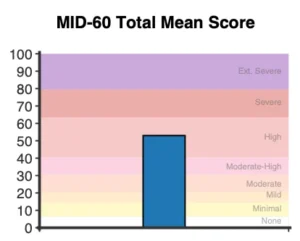
We’ve completed several upgrades to the MID-60 report to improve clinical clarity, interpretability, and decision support – read on to learn more.
Yours sincerely,
Ben

To provide an immediate high-level summary of the client’s likely diagnostic profile, the report now:
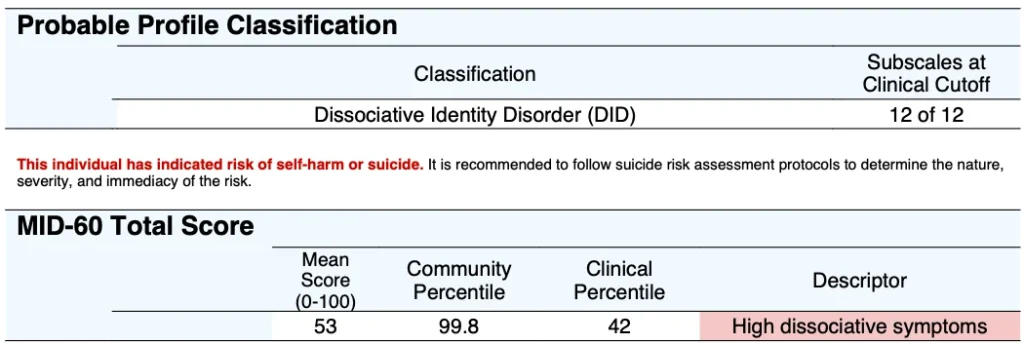
Prominent Safety Flag
A safety alert now appears clearly when any of the three critical risk-related subscales exceed threshold, ensuring these indicators are not overlooked.

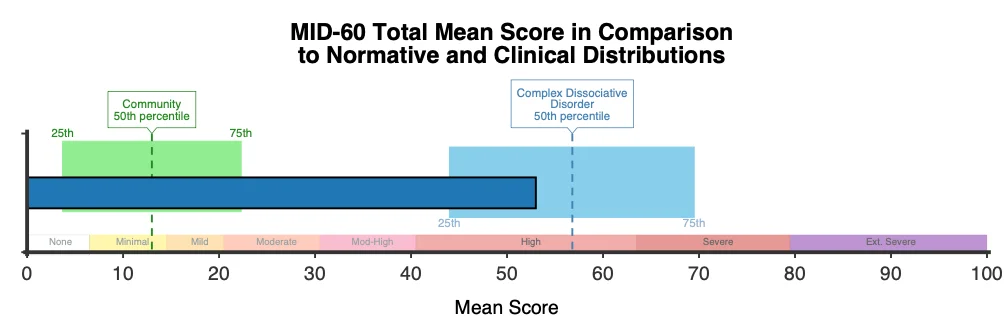
We’ve also expanded the MID-60 visualisations, giving clinicians a clearer and more intuitive overview of symptom patterns and clinical thresholds.
A Comparison Graph displays the client’s score against both community and clinical reference populations. This makes it easier to see at a glance whether the presentation aligns more closely with typical dissociative experiences or pathological dissociation:
A redesigned Subscale Bar Chart with shaded bands clearly marking the clinical range for each subscale, allowing clinicians to quickly see which symptom areas have crossed the threshold:

And, when a client is re-assessed, a Multi-Administration Line Graph now shows how their overall dissociation score changes over time, alongside the severity bands, making it easier to see symptom trends at a glance and monitor response to treatment.
A comprehensive interpretive narrative now provides clearer guidance and more actionable insights for assessment, risk management, and treatment planning, and facilitates smoother integration with your progress notes, reports and letters.

If you know any clinicians who might be interested in these scales, please let them know! We’re constantly adding assessments to the NovoPsych test library.
View over 150 of the current psychometric tools available on NovoPsych here.
Warm regards,
Dr Ben Buchanan
Psychologist
NovoPsych Co-founder
[email protected]
LinkedIn